
"Big grains"
1000 article(s) found
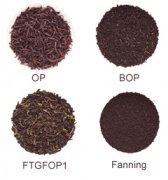
The grading standard and classification of black tea what is the meaning of FOP and BOP in black tea which grade is higher?
Many delicious friends who taste black tea want to get a kind of black tea quickly, but when they open some orange software and want to chop an order, they all want to buy the top tea, but find that the grade of tea is big. What is BOP? What is FBOP? This STGFOP looks so awesome. Does it mean top class? Really dazzling, impatient, straight from the beginner to

Introduction to El Salvador Pacamara Coffee Bean Grinding scale method
There are more than 10,000 coffee farms around the world, including coffee farms for popular coffee beans, high-quality coffee bean farms and rare coffee bean farms. Incht Manor is Guatemala's top coffee estate, located in Guatemala's famous producing area of Vivette South Fruit Plateau, by Ag
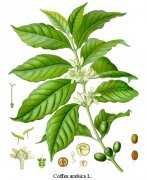
Coffee cultivation techniques detailed explanation of planting knowledge of Coffee trees
Coffee, cocoa and tea are called the three major beverages in the world, and their output, consumption and output value all rank first. In addition to being used as a beverage, coffee can also extract caffeine and coffee oil; in medicine, it can be used as an anesthetic, stimulant and diuretic cardiotonic agent. Coffee pulp can be used to make wine, vinegar, pectin and molasses; dried pulp can be used as animal feed; dried fruit shell can be used as fertilizer and burning

Boutique Coffee explains the types of bean grinders in detail
1. The ancient house bean grinder is also called the three-sided bean grinder, which is a hand grinder with soft wood grain. If the rotation speed or force of the handle is uneven, the coffee beans after grinding will be uneven. It should be noted that this bean grinder is characterized by fast grinding, uniform thickness and adjustable thickness. How to operate: put the coffee beans in the upper container, gently shake to the handle, grind the coffee.

Common sense of bean grinder types of fine coffee grinder
1. The ancient house bean grinder is also called the three-sided bean grinder, which is a hand grinder with soft wood grain. If the rotation speed or force of the handle is uneven, the coffee beans after grinding will be uneven. It should be noted that this bean grinder is characterized by fast grinding, uniform thickness and adjustable thickness. How to operate: put the coffee beans in the upper container, gently shake to the handle, grind the coffee.
What are the rumors about Brazilian coffee culture? what is the real Brazilian coffee culture?
For professional baristas, please follow the coffee workshop (Wechat official account cafe_style) Brazil, which is famous for producing coffee beans. Brazilian coffee beans are also distributed in China. Coffee lovers are very familiar with the country, but how do you enjoy coffee in Brazil? Here, we will introduce the coffee culture and its characteristics in Brazil. Coffee is the most consumed food in China.

History, cultivation, characteristics and varieties of Arabica
Arabica is deeply loved by Chinese people with a short history of coffee contact because of its strong fruity aroma. it was introduced to China by missionaries in the 19th century and was widely planted in Panzhihua, Sichuan, and the dry-hot valley of the Jinsha River in western Yunnan, where the sunshine was long and there was a big temperature difference between day and night. The local people solved the problem of insufficient seasonal rainfall by diverting water up the mountain.
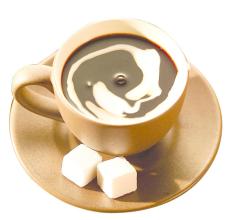
Lively fragrance of Guatemalan Coffee Manor flavor and taste characteristics of Incht Manor
Between 1950 and 1954, the ruling president Jacobo Abens implemented land reform, when big landlords, who accounted for 2 per cent of the country's population, owned about 70 per cent of the country's arable land. Arbens wrote a check for land reform, promising to buy the land held by the big landlords and redistribute it to small farmers. Arbens won the election, and the land reform plan was carried out immediately. For owning land greater than 223
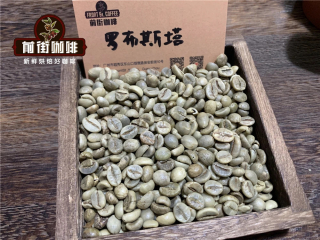
A brief introduction to the description of the flavor, taste and aroma characteristics of robusta coffee beans why the harm of robusta beans is notorious
Its flavor is so bright and strong, but if you want to taste it directly, you have to be prepared. In general, robusta coffee is used in instant coffee (which extracts about twice as much liquid as Arabica), canned coffee, liquid coffee and other industrial coffees. The content of caffeine is much higher than that of A.
What is Iron pickup Coffee? introduction to the taste characteristics of iron pickup fine coffee beans in Yunnan Province
Professional coffee knowledge exchange more coffee bean information please follow the coffee workshop (Wechat official account cafe_style) front street-Yunnan iron card coffee introduction tin card, this variety belongs to a sub-variety of Elaraby. The top leaves of the iron pickup varieties are usually red copper, so the iron pickup is also known as the red top.

Jasmine scented Guatemala Antigua Coffee Flavor taste Manor characteristics of boutique coffee beans
Between 1950 and 1954, the ruling president Jacobo Abens implemented land reform, when big landlords, who accounted for 2 per cent of the country's population, owned about 70 per cent of the country's arable land. Arbens wrote a check for land reform, promising to buy the land held by the big landlords and redistribute it to small farmers. Arbens won the election, and the land reform plan was carried out immediately. For owning land greater than 223

Flavor description of Yunnan Katim Coffee beans introduction to the Manor by Grinding scale treatment
Coffee cultivation in China is concentrated in Yunnan and Hainan provinces. Yunnan has a large output, with an annual output of about 26000 tons in recent years, accounting for 90 per cent of the national output. It is said that Yunnan coffee came from the French 70 or 80 years ago. The main variety is Arabica Arabica, that is, the so-called small seed coffee, commonly known as Yunnan small grain coffee. The excellent geographical and climatic conditions of Yunnan provide good conditions for the growth of coffee.

Yunnan Coffee planting Yunnan Coffee beans Yunnan small Coffee Chinese Coffee
Yunnan Coffee in China was planted on a large scale in the mid-1950s, with a planting scale of 4000 hectares. By the end of 1997, the planting area of coffee in the province had reached 7800 hectares. At present, the planting area of the province accounts for 70% of the national area, and the output accounts for 83% of the whole country. Yunnan coffee has established the dominant position in China in terms of planting area and coffee bean production. Cloud

Introduction to the planting Environment of Tieka Variety Coffee
Bourbon coffee is a variety of small-grain coffee second only to Tibica. At first, the main branch and the trunk grew upward at 45 degrees, and drooped with fruit load, the lateral branches were denser, the fruit was more, and the yield was higher. But the berries are smaller and ripen more slowly. The top bud and tender leaves of Bobang are green, called green-top coffee. It was not until 1715 that France transplanted Yemeni mocha round beans to the island of Bourbon on the east coast of Africa.
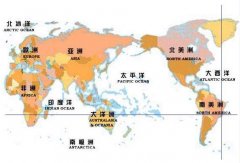
Sidamo Coffee Flavor Sidamo Coffee Sour Coffee Powder
The term "fine coffee" was first put forward by Ms. Knudsen of the United States in Coffee and Tea magazine. At that time, Ms. Knudsen, as a coffee buyer at B.C. Ireland in San Francisco, was very dissatisfied with the neglect of the quality of raw coffee in the industry, and even some big roasters mixed a large amount of Robesda beans in the comprehensive beans, so she put forward the concept of boutique coffee.
The siphon pot of the whole strategy of brewing small grains of coffee
Features: the brewed coffee has good aroma and high mellowness. Corresponding coffee beans: non-heavily roasted single coffee beans and mixed coffee beans, such as Blue Mountain, Colombia, Brazil, etc. Adapt to the crowd: people who pursue the quality of coffee, are not afraid of the trouble of washing pots, and are full of the spirit of continuous exploration. Preparation materials: 1) an appropriate amount of pure water; you can use the kind of pure water used in household drinking fountains or
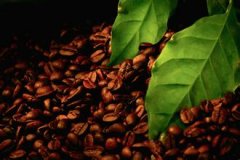
Coffee beans have the same characteristics as those of coffee beans.
1. The seed coat of small fruit coffee has been removed, oval or oval in shape, 8-10mm in length, 5-7mm in diameter, 3-4mm in thickness in the middle, raised on the back, flat on the ventral surface, with slightly curved longitudinal groove and paper seed coat marks. Raw products are yellow or dark green; baked products are dark brown with special aroma and slightly bitter taste. Astringent. Coffee flower 2. Coffee seeds are slightly larger, ovoid, 9-11mm long and 7-7-in diameter.
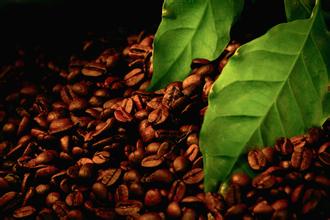
Coffee beans have the same characteristics as those of coffee beans.
1. The seed coat of small fruit coffee has been removed, oval or oval in shape, 8-10mm in length, 5-7mm in diameter, 3-4mm in thickness in the middle, raised on the back, flat on the ventral surface, with slightly curved longitudinal groove and paper seed coat marks. Raw products are yellow or dark green; baked products are dark brown with special aroma and slightly bitter taste. Astringent. Coffee flower 2. Coffee seeds are slightly larger, ovoid, 9-11mm long and 7-7-in diameter.
Ethiopian Coffee Encyclopedia
The coffee tree originated in Ethiopia, it was originally a wild plant here, and the name coffee comes from the small town of Ethiopia-Kaffa. In fact, many coffee trees in Ethiopia are still wild plants, and the coffee grown on this coffee tree is full-grained and slightly alcoholic. Ethiopia Harra in Ethiopia a long time ago, wild coffee was always raw.
Some coffee beans origin, characteristics and introduction
West (South America): One of the world's largest coffee producers and exporters, it can be called the "coffee continent." Almost all Arabica varieties are of good quality and stable prices, and have been a necessity for blended coffee since ancient times. Name Roasting degree Taste characteristics Brazilian coffee Moderately roasted mild, sour and bitter moderate, soft aroma especially